2018年9月27日星期四

AliveCor gets FDA breakthrough status for Hyperkalemia diagnosis

"/

Hyperkalemia is defined as the condition where there would be a higher potassium level in blood. The potassium level goes higher due to chronic kidney disease and type 1 diabetes, suffered by millions of people. Irregular heartbeat is the common symptom of hyperkalemia. A blood sample is required to detect the potassium level till date.
But a Silicon Valley start-up company named AliveCor along with the doctors from Mayo Clinic have developed a novel technology, where the blood sample is not required. Just by looking at the electrocardiogram (ECG) pattern which records the electric signals of the heart, the level of potassium can be detected.
Hence, the U.S. Food and Drug Administration had given ‘breakthrough device’ designation on 10th September 2018 for a novel way of potassium level measurement.
Vic Gundotra, the CEO of AliveCor, said "It was a pie-in-the-sky idea that we could use AI to see something like this in the ECG when no one else could; It's a big milestone for us."
This screening tool would prove beneficial for the patients who stay at home and don’t prefer to visit labs and give the blood sample.
AliveCor team expects that this product would reach the market in a year, after the submission of clinical trial results.
from Drugdu  https://goo.gl/QgQoHk

2018年9月13日星期四

Baxter’s new Actifuse Flow bone graft alternative gets FDA nod.

"/

Actifuse Flow, Baxter International’s new synthetic bone graft surrogate from its osteobiologics surgery series, wins FDA approval for implementation in orthopedic surgeries.
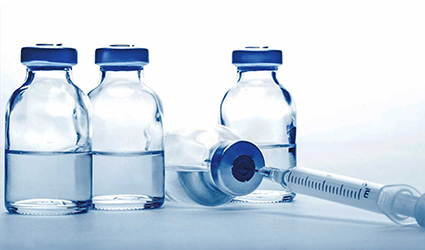
In order to reach tine bony cracks and gaps of the skeletal structure, the new bone graft alternative is designed to reach these exact cranny locations. It is delivered via a syringe already containing it to speed-up bone growth. No preparatory procedure or mixing is needed to use this bone graft substitute and it maintains its fluid consistency during the surgery.

The surgical products manufacturer’s Actifuse Bone Graft Alternative constituting Actifuse Flow implements the silicate-substituted technology for bone formation via raised levels of silicon.
It becomes an ideal candidate for minimally invasive surgical procedures as the syringe facilitates the start and stop of flow to deliver the precise amount of substance. This also enables it to compact small done deformities as well as the intricate disorder of bone structure.
Additionally, when the bone is healing, the natural bone replaces this graft substitute as it gets reabsorbed, making it suitable for orthopedic surgeries on the posterolateral spine, extremities and the pelvis.
Baxter Advanced Surgery business president Wil Boren said, “As part of our growing product portfolio, Actifuse Flow builds on the extensive clinical experience of our Actifuse Bone Graft Substitute. We strive to pioneer products that provide surgeons with innovative and dependable tools to help enhance healing, improve outcomes and reduce the total cost of care.”
The Actifuse Flow will be available in the market in 1.5ml, 3ml and 5ml sizes in the upcoming months.
from Drugdu  https://goo.gl/QgQoHk

2018年9月3日星期一

Machine Learning Applied to Manage Treatment-Resistant Depression

"/

In an effort to know more about the etiopathogenesis of non-treatment responding to depression and to improve its management, Takeda and ConvergeHEALTH, data science institute by Deloitte collaborate to analyze patient datastores.
Disease datasets of conditions like non- treatment responding migraine from insurance claims data including diagnoses, management protocols and prescribed medicines were used to conduct linear and non-linear models on.
The researchers aimed at spotting the key aspects of the data that brought out the maximum impact on treatment results. A right mix of the correct data and apt questions lead to the enhancement in result estimation of deep learning models. Hence, larger labyrinthine datasets were available for evaluation and a clearer perception of patient response was obtained.
"In severe depression, patients often go through multiple medications before finding one that works," said Dan Housman, chief technology officer at ConvergeHEALTH by Deloitte. "This testing process can be challenging for patients and their psychiatrists."
The method is "prescribed after other medications did not work in what is deemed a treatment-resistant patient,” he added. “We’re interested in looking at depression patients and their journey between treatments to better understand which patients may fall into the treatment-resistant category and when a certain switch will be sustained without further switches."
Machine learning is applied to claims data sets to design prognostic models that identify the resistant patients and the different drugs for depression which the patients can shift to. The successful prognostic models, so designed, enable organizations to alter protocols and offer digital diagnostic devices that evaluate past events of patients to pick which individual would be positively affected by a change in medication or which drug could be started as the primary treatment for that patient.
"The benefit to the patient is a shorter journey to a drug that will keep them well and less time struggling with their depression," Housman described. "The benefit to Takeda is to be able to build tools both with guidelines or decision support systems to help physicians find the patients who can benefit from our products.”
from Drugdu  https://goo.gl/QgQoHk